
Early Engineering
activities buried deep in the ancient past.
Throughout history, invention and discovery have been intrinsically linked to the evolution of abstract thinking!
The Paleolithic stone tool makers over 3 million years ago laid the foundation for the application of engineering and scientific principles in the 21st century. This ongoing observation and utilization of natural laws and mechanical practicalities continues to form the bedrock of modern society’s development.
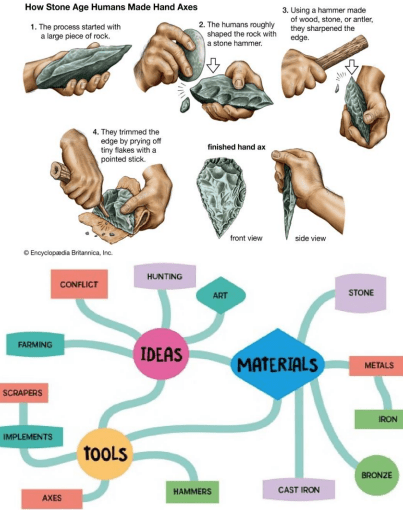
Heralded by the era of toolmaking and the introduction of farming, engineering has been the third age of humankind in its evolution from the Stone Age to the world of machines, industrialization, telecommunications, and transportation.
An important part of understanding this world of complex and sophisticated machines is the way the entrepreneurs of the past forged natural materials into compounds and alloys, reforming them and exchanging levels of energy and producing heat engines.
From this came an industrial revolution, making possible previously unimagined opportunities for all.
Engineering has indeed played a pivotal role as the third age of humankind’s evolution, marking a significant transition from the Stone Age to the era of machines and industrialisation.
A crucial aspect of comprehending this world of intricate and advanced machinery lies in the historical techniques employed by entrepreneurs to forge natural materials into compounds and alloys.
This process involved the transformation of materials, the exchange of energy levels, and the creation of heat engines, all of which were ground-breaking advancements in the field of engineering.
generation web technologies
The rapid evolution of web technologies continues to drive innovation across various industries. The emergence of next-generation web technologies has significantly transformed the digital landscape, offering unprecedented opportunities for enhanced user experiences, improved performance, and advanced functionality………
From progressive web apps (PWAs) to accelerated mobile pages (AMP), the focus on speed, interactivity, and mobile optimization has become paramount. Additionally, the widespread adoption of responsive design principles and the integration of artificial intelligence have revolutionized the way users interact with digital content.
Moreover, the utilisation of advanced programming languages such as Web Assembly and TypeScript, alongside the exploration of decentralized web technologies like blockchain, reflects a broader shift towards more secure, efficient, and decentralized web ecosystems. The intersection of virtual and augmented reality with web development further underscores the boundless potential of next-generation technologies in reshaping the online experience.
In essence, the continuous advancements in web technologies are reshaping the digital landscape, presenting unparalleled opportunities for businesses and developers to create engaging, immersive, and dynamic online experiences.
Virtual Reality (VR)
Virtual reality (VR) has rapidly advanced in recent years, offering immersive and interactive experiences across various industries. From entertainment and gaming to education and healthcare, VR technology continues to revolutionise the way we engage with digital content. As the capabilities of VR hardware and software evolve, the potential for innovative applications and experiences within virtual environments continues to expand
Artificial Intelligence (AI)
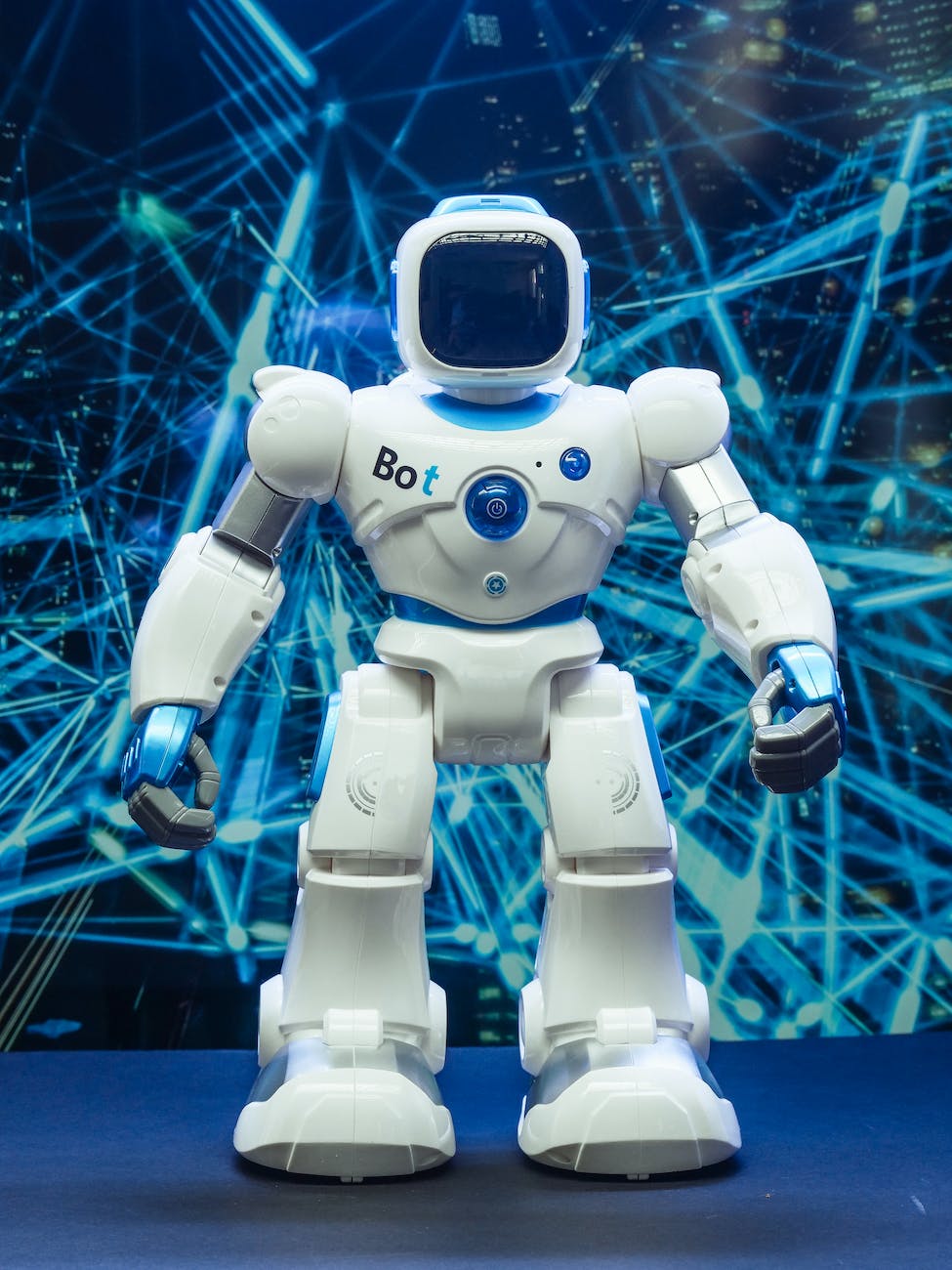
Artificial intelligence (AI) refers to the simulation of human intelligence processes by machines, particularly computer systems. These processes include learning, reasoning, problem-solving, perception, and language understanding.
AI can be applied to various tasks such as speech recognition, decision-making, language translation, and visual perception. The development of AI technologies holds the potential to significantly impact numerous industries, from healthcare and finance to transportation and entertainment.

Machine Learning
Machine learning is a branch of artificial intelligence that focuses on the development of algorithms and models that enable computers to learn and make predictions or decisions without being explicitly programmed. It has found applications in various fields such as natural language processing, image recognition, and recommendation systems. The ability of machine learning algorithms to analyse and learn from data makes them valuable tools for extracting meaningful insights and patterns from complex datasets.

It’s fascinating to see the rapid evolution and diversification of IT fields. The incorporation of next-generation web technologies, bioinformatics, cloud computing, global information systems, Digital Twin, edge computing, and the Internet of Things reflects the expanding landscape of technology.
Additionally, the integration of Artificial Intelligence, Machine Learning, and Virtual Reality showcases the innovative strides being taken in these domains. As these fields continue to grow and intersect, they are poised to redefine the future of IT.
Bioinformatics
Through the use of computational tools and algorithms, bioinformatics helps to unravel complex biological processes, identify genetic variations, and understand the functions of genes and protein. This field continues to evolve rapidly, making significant contributions to our understanding of living organisms and their underlying molecular mechanisms.
Bioinformatics is an interdisciplinary field that combines biology, computer science, and information technology to analyse and interpret biological data. It plays a crucial role in areas such as genomics, proteomics, and evolutionary biology, enabling researchers to make sense of large-scale biological data sets.
Cloud Computing
Cloud computing has revolutionized the way businesses and individuals manage and store data. By utilizing remote servers hosted on the internet to store, manage, and process data, cloud computing offers numerous benefits such as cost efficiency, scalability, and flexibility.
This technology has become an integral part of modern IT infrastructure, enabling seamless access to resources and applications from anywhere with an internet connection. Furthermore, cloud computing plays a crucial role in driving innovation and digital transformation across various industries.
Business Analytics
involves the use of statistical analysis and other mathematical techniques to study past business performance and make predictions about the future. It encompasses a wide range of activities, including data mining, data visualization, predictive modelling, and more. Businesses use analytics to gain insights into their operations, customer behaviour, and market trends, ultimately aiding in informed decision-making and strategic planning.
Global Information Systems
Global Information Systems (GIS) refer to the interconnected network of computer systems and software used to capture, store, manipulate, analyse, manage, and present spatial or geographical data. These systems play a critical role in various industries, including urban planning, environmental resource management, business, and government agencies. GIS allows organizations to gain valuable insights from location-based data, leading to informed decision-making and efficient resource allocation.
The use of GIS extends across a wide range of applications, such as mapping, disaster management, transportation planning, and natural resource management. As technology advances, GIS continues to evolve, integrating with other technologies like remote sensing, GPS, and mobile data collection to provide more accurate and comprehensive spatial information.
The significance of Global Information Systems in today’s interconnected world cannot be overstated, as it enables businesses and organizations to leverage spatial data and analysis for better understanding and responding to global challenges and opportunities.
Edge Computing
Edge computing is a decentralized computing infrastructure where data processing and storage are located closer to the source of data, typically at the periphery of the network. This enables faster processing of data and reduces the need to transmit it back to a centralized data centre.
Edge computing is becoming increasingly important in various fields such as IoT, manufacturing, and retail, as it allows for real-time data analysis and decision-making, leading to improved efficiency and responsiveness in the digital ecosystem.
Digital Twin
The concept of Digital Twin involves creating a virtual replica of a physical asset or system to enable real-time monitoring, analysis, and simulation. This innovative technology serves to optimize performance, predict maintenance needs, and enhance efficiency across a range of industries, such as manufacturing and infrastructure.
These fields represent just a glimpse of the diverse and dynamic landscape of IT. As technology continues to advance, we can expect more exciting developments and opportunities in the years to come.


Engineering has been the third age of humankind in its evolution from the Stone Age to the world of machines, industrialisation

 Rahefetano